

How To Set Password For Shared Folder In Windows 10
If you've got files you'd rather others couldn't access, locking them up with a countersign can be the simplest way to get peace of mind. Windows has built-in support for basic password protection, letting y'all keep your files safe from prying optics.
Before we go started, we should offering a warning – while this method is simple and effective, it's not intended for big-scale or mission-disquisitional use. It goes without saying you should invest in purpose-built encryption software if y'all're storing actually sensitive data on your device.
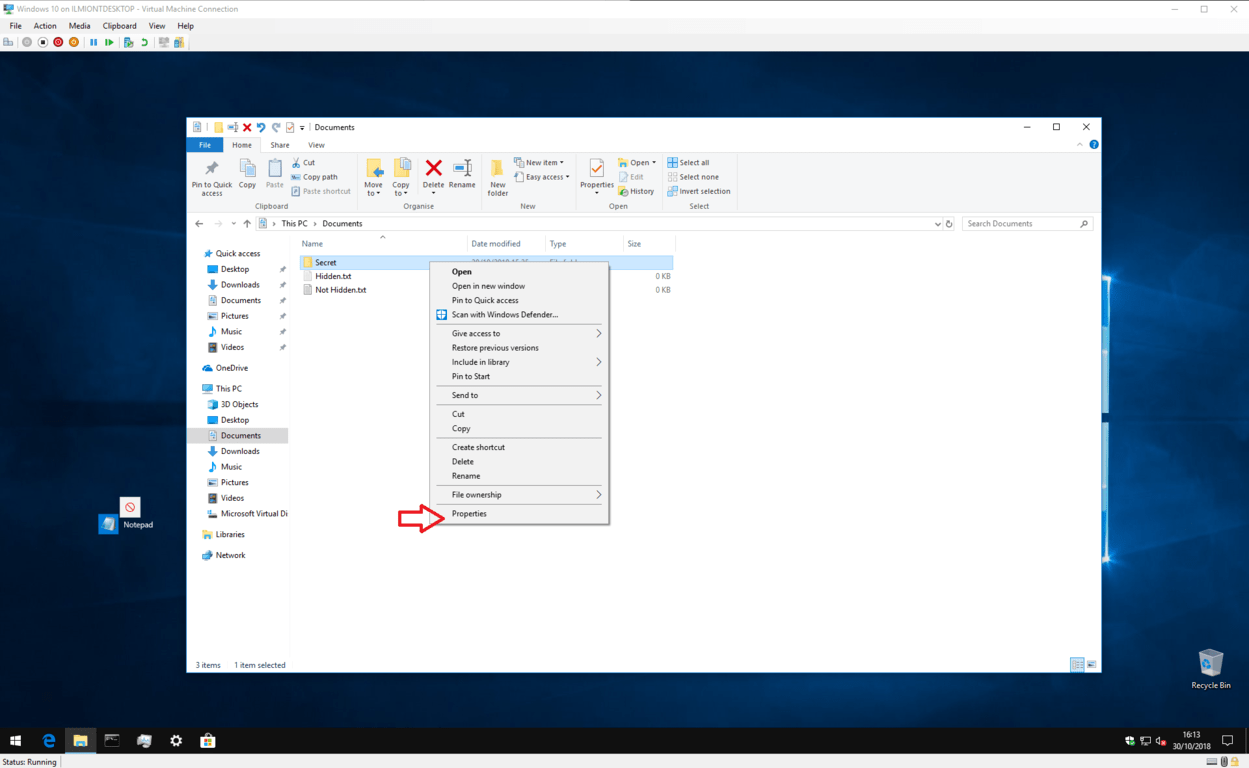
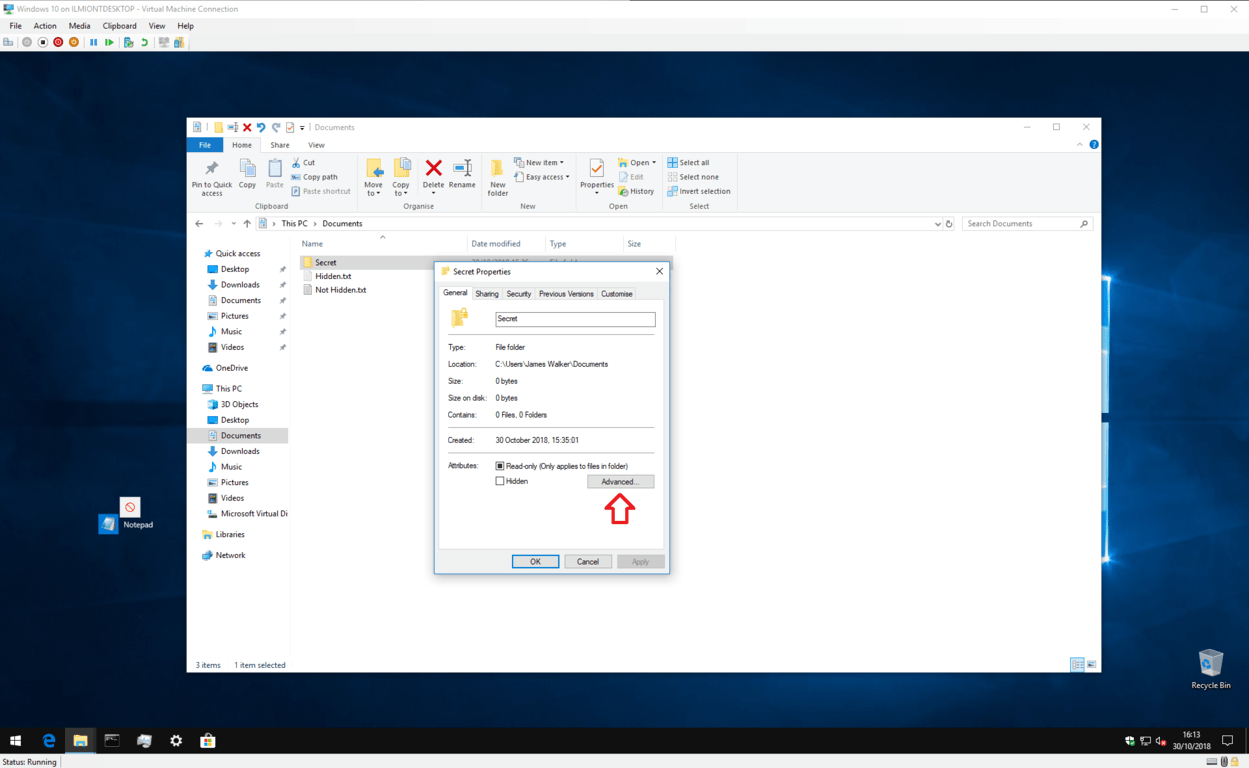
To begin, use File Explorer to find the file or folder you wish to protect. Right-click on it and click "Properties" at the bottom of the context menu. From here, press the "Avant-garde…" button in the Attributes section of the window.
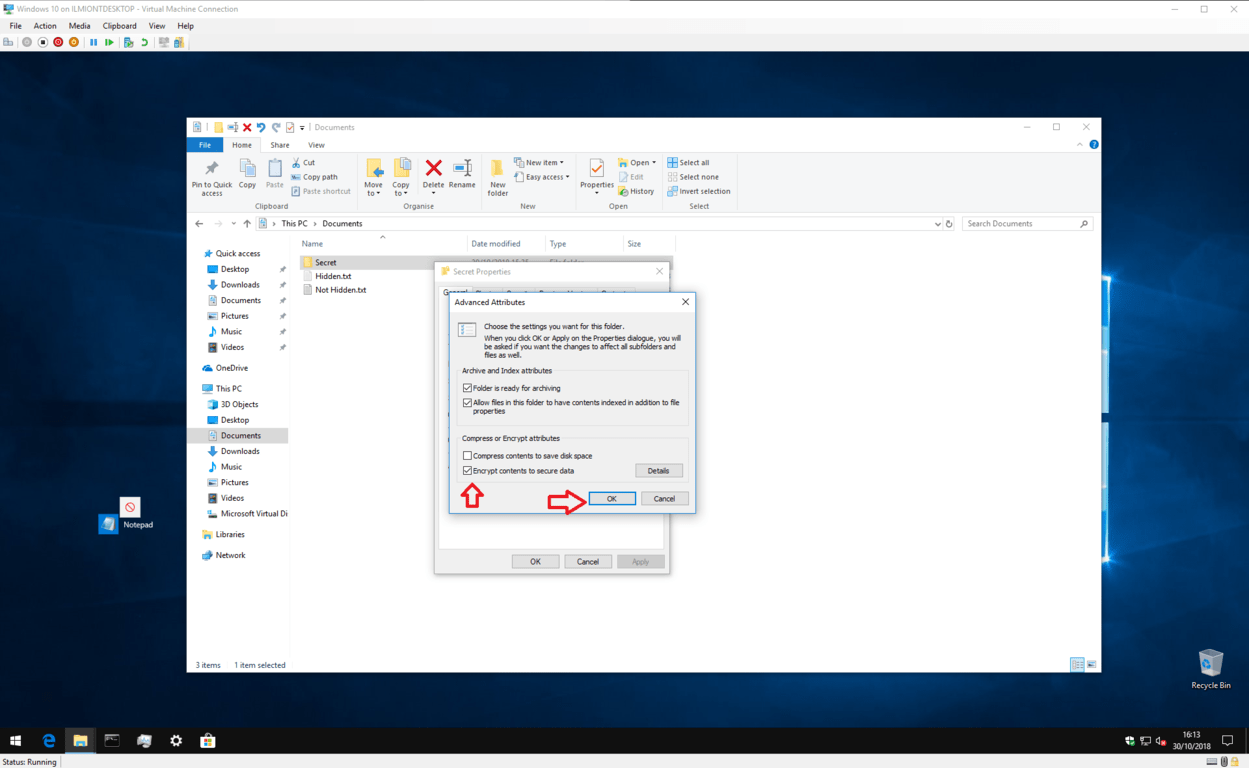
At the bottom of this pane, tick the "Encrypt contents to secure data" checkbox. Click the "OK" button to go back to the chief Properties window. Now press "Utilize" and Windows will brainstorm to encrypt your files.
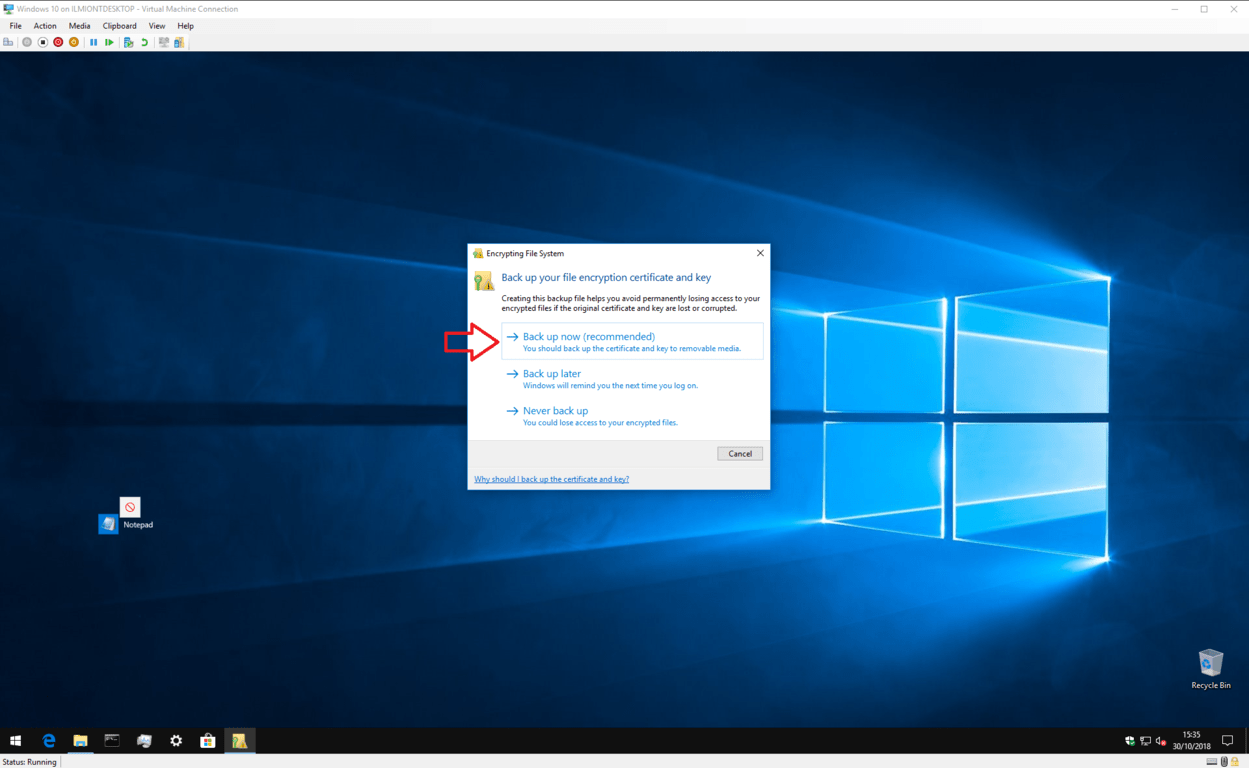
When the process completes, you'll be prompted to back-upward your encryption primal if you've never used the feature before. Click the toast notification and follow the prompts to make a annotation of your encryption key. You'll need this information if y'all e'er lose admission to your encrypted files, and so information technology's important yous take the fourth dimension to dorsum it up now.
With the back-upwardly done, your files are now secured. They're encrypted with a key that'south tied down to your Windows user account. If anyone else tries to access the file – whether from some other user business relationship, or by physically removing your difficult bulldoze – the contents will appear to be meaningless garbled text.
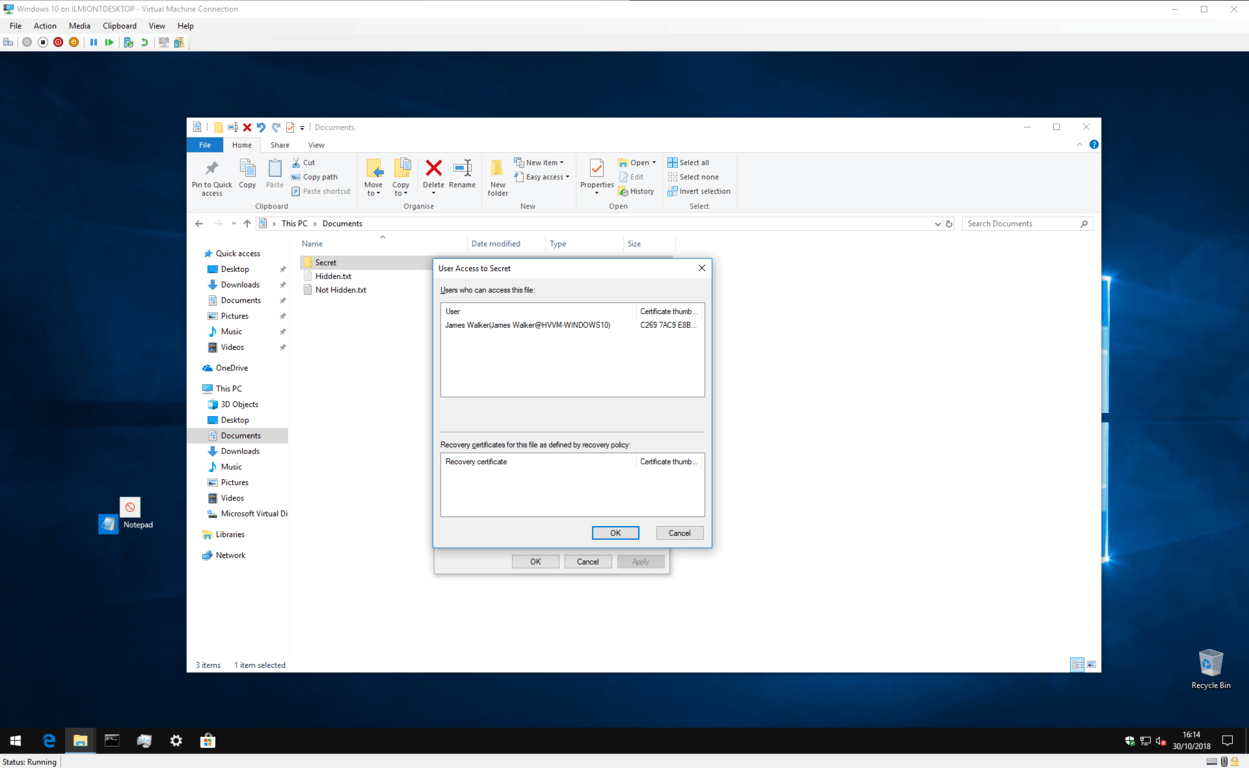
Y'all can reverse the encryption at any time by heading back to the Properties window and opening the Avant-garde Attributes pane again. Simply untick the "Encrypt contents to secure data" checkbox and click OK to close the windows. After encryption, you tin besides press the "Details" button next to the checkbox to see information nigh the encryption certificate and available recovery procedures.
That's all there is to information technology. Once again, we'll remind you this method isn't intended for high-security purposes. Nonetheless, information technology's ideal if you're using a shared PC and merely want to keep some files inaccessible to other user accounts on the device. Simply recall to lock your business relationship (Win+L) whenever yous walk abroad from the screen – your files will be unencrypted every bit soon as you login!
If you need stronger protections, you might want to consider investing in 3rd-party software that's peculiarly designed for this purpose. Enabling Windows' BitLocker feature (Pro and Enterprise edition only) tin also requite peace of listen if you desire all your files to be encrypted. This offers total-disk encryption with the keys tied down to a TPM, a hardware module defended to certificate storage.
BitLocker operates at a dissimilar level to file-based encryption, solving different problems. The feature encrypts the entire bulldoze, not individual files – so one time Windows starts, everything on the bulldoze is decrypted and made available to anybody. File-based encryption gets unlocked only later you login, and deals with individual files and folders.
Share This Post:

How To Set Password For Shared Folder In Windows 10,
Source: https://www.onmsft.com/how-to/how-to-password-protect-a-folder-or-file-in-windows-10
Posted by: myerslizeatied.blogspot.com
0 Response to "How To Set Password For Shared Folder In Windows 10"
Post a Comment